Guide No. 10 · Care
How to Maintain Gear So It Lasts Decades
Simple care routines for leather, waxed canvas, cast iron, wood, wool, boots and blades, with how often to do each and the mistakes to avoid.
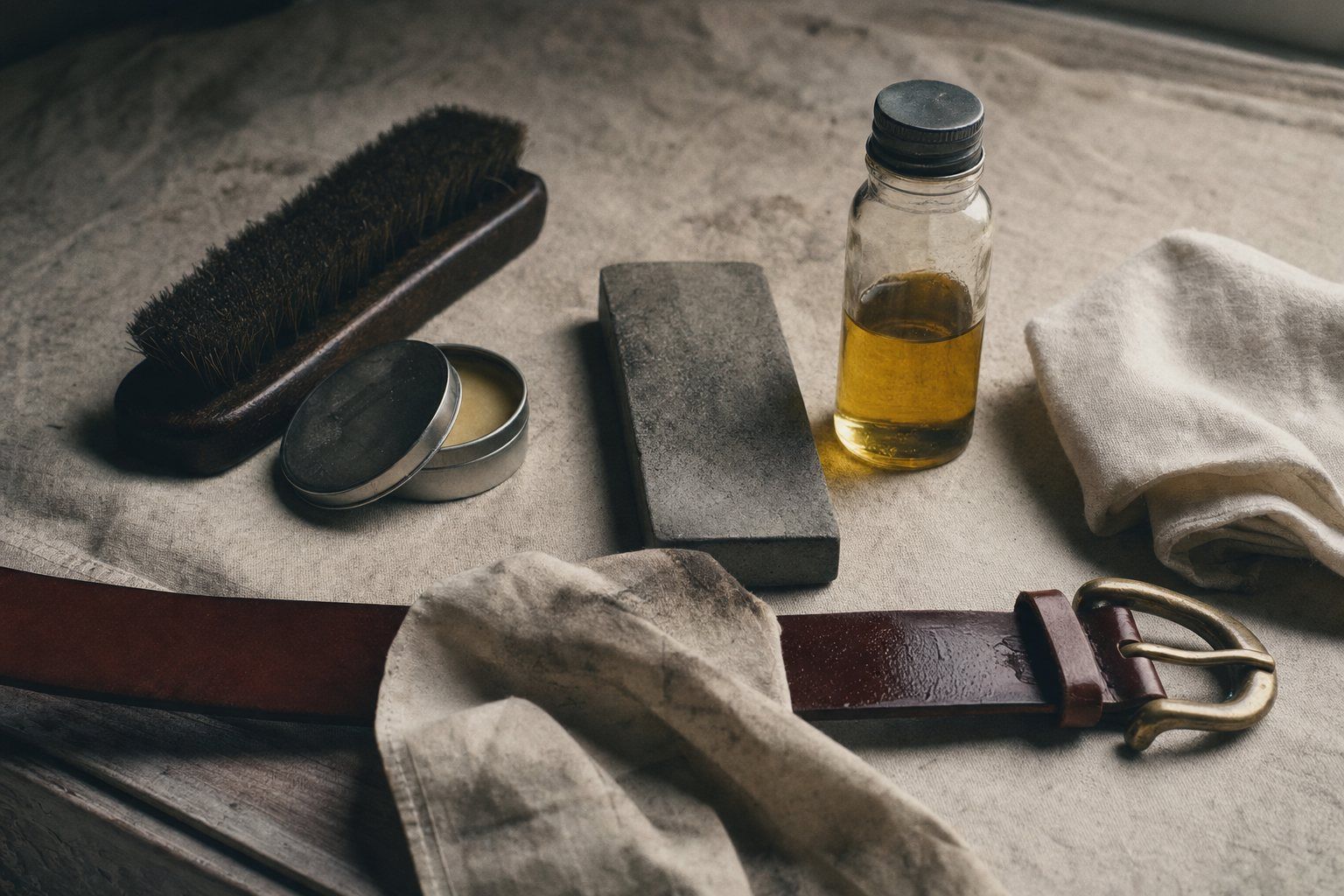
Durable gear isn’t maintenance-free, but the maintenance is simple. Most of it takes a few minutes every few months. Here’s what to do for each material, how often, and what to avoid.
The three universal rules
- Keep it clean. Dirt and grit act like sandpaper on leather, fabric and stitching.
- Keep it dry, but not too dry. Moisture causes rot, rust and mildew. Direct heat cracks leather and wood.
- Fix small things early. A loose stitch or a dry patch is a five-minute fix. Left alone, it becomes a repair bill.
Leather (bags, belts, wallets, jackets)
- Brush or wipe off dust and dirt regularly with a soft brush or dry cloth.
- Condition when the leather looks dry or pale, or feels stiff. For daily-use items that’s often every 3 to 6 months. Use a small amount, rub it in, let it absorb, then buff.
- If it gets wet, blot it, let it dry at room temperature away from heat, then condition once dry.
- Store in a breathable bag, stuffed with paper to hold its shape. Never in plastic.
Avoid: too much conditioner (makes leather soft and greasy), household cleaners, hair dryers and radiators.
Boots and leather shoes
- Brush after wearing, especially off mud and salt.
- Rotate pairs so each gets a day to dry out.
- Use cedar shoe trees to absorb moisture and hold the shape.
- Condition the uppers every month or two with regular wear, and polish if you like the look.
- Resole before the midsole wears through. A cobbler can tell you when.
Waxed canvas
- Brush off dirt when dry. Spot clean with cold water and a cloth.
- Re-wax when water stops beading or the fabric looks pale and dry, often once a year. Warm the wax, rub it in, then use a hair dryer on low to melt it evenly.
- Never machine wash or use hot water and soap, which strip the wax.
Cast iron and carbon steel
- Clean while warm with hot water and a brush or scraper. A little soap is fine on a well-seasoned pan.
- Dry immediately and fully, ideally on the stove for a minute.
- Oil lightly with a thin coat of cooking oil, then wipe it almost all off.
- Re-season if rust appears: scrub the rust off, then oil and bake it.
Avoid: soaking, the dishwasher, and storing it with a lid on while damp.
Solid wood (boards, furniture, tool handles)
- Wipe clean with a damp cloth. Dry right away.
- Oil when the wood looks pale or dry. Food-safe mineral oil or board butter for kitchen items, furniture wax or oil for furniture.
- Tighten loose screws and joints when you notice them.
Avoid: standing water, the dishwasher, and direct sun or heaters.
Wool
- Brush coats after wearing to remove dust and loosen surface dirt.
- Air woolens between wears instead of washing them often. Wool resists odor naturally.
- Wash by hand in cool water with wool wash, or dry clean, only when needed.
- Store clean with cedar to deter moths, since moths go for soiled wool.
Blades and tools
- Hand wash and dry knives right after use.
- Hone often with a honing rod or strop to keep the edge straight.
- Sharpen on a stone when honing no longer helps, typically a few times a year for a home kitchen knife.
- Oil carbon steel tools lightly to prevent rust.
A simple care calendar
| Task | How often |
|---|---|
| Brush leather, canvas, wool | Weekly or after heavy use |
| Condition leather goods | Every 3 to 6 months, or when dry |
| Condition boots | Every 1 to 2 months with regular wear |
| Re-wax canvas | About once a year |
| Oil wooden boards | Monthly with regular use |
| Hone knives | Every few uses |
| Sharpen knives | A few times a year |
| Check stitching, straps and hardware | Every few months |
These are starting points. Adjust to your climate and how hard you use things. If you’re in a dry climate, condition more often. In a damp one, focus on airflow and drying.
When to hand it to a pro
Some jobs are worth paying for: resoling, restitching load-bearing seams, replacing zippers, and deep repairs to leather. See why repairability matters for who does what. For how care pays off over the years, see gear that gets better with age.