Guide No. 09 · Cost
The Hidden Cost of Cheap Goods
Why cheap goods often cost more over time, counting replacements, time, shipping, returns and waste, and when buying cheap is actually the smart move.
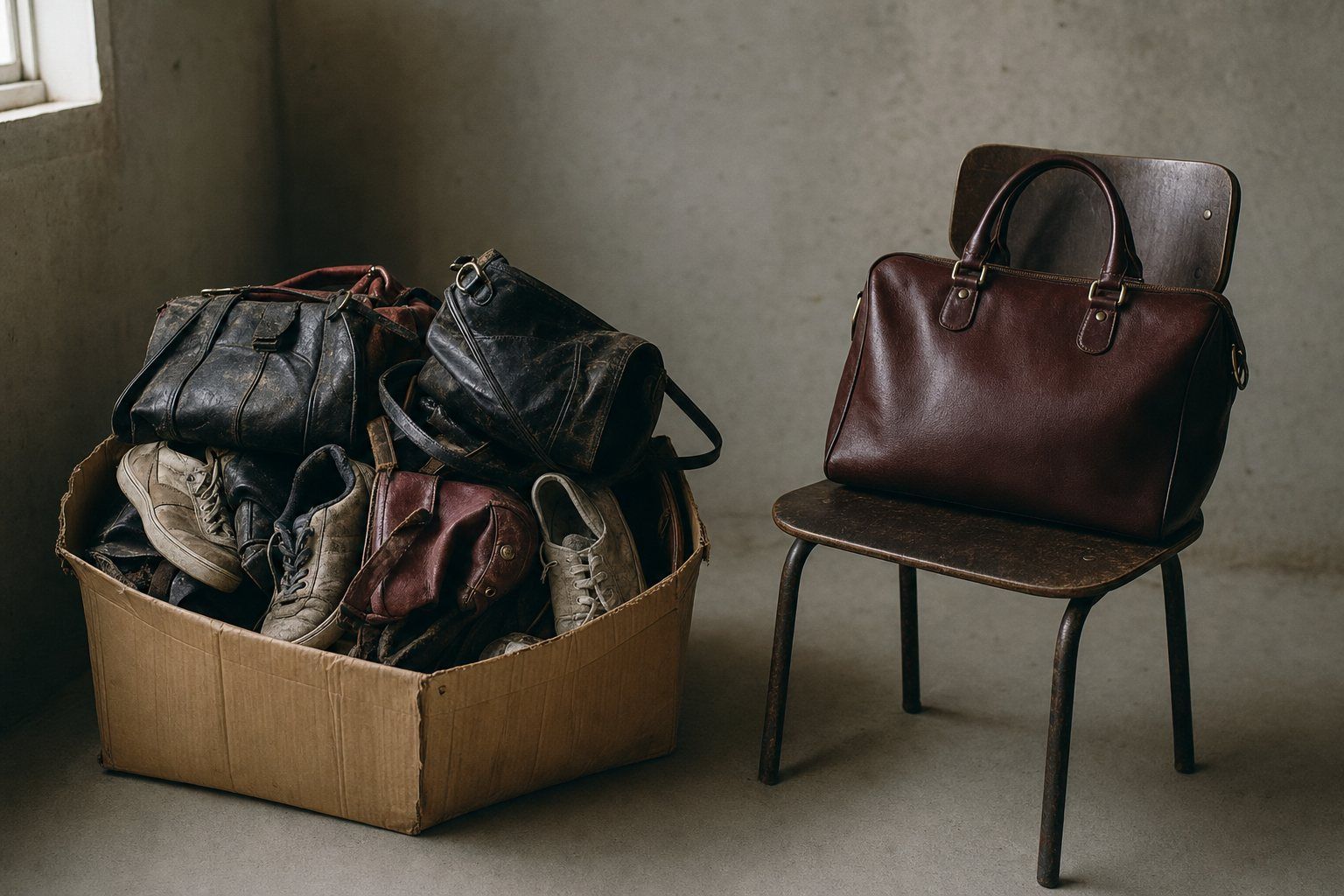
The price tag is the only cost most of us look at. It’s also the least useful one for anything you’ll use for years. Here’s what a low price leaves out.
1. Replacements
This is the big one. If a $50 bag lasts two years, you’ll buy ten of them in twenty years. That’s $500, plus whatever prices do in the meantime. A $300 bag that lasts the full twenty years costs less than that, even with some upkeep.
| Over 20 years | Cheap bag | Durable bag |
|---|---|---|
| Price each | $50 | $300 |
| Lasts | 2 years | 20 years |
| Number bought | 10 | 1 |
| Upkeep | $0 | $100 (conditioner, one repair) |
| Total | $500 | $400 |
| Per year | $25 | $20 |
Run your own numbers in the cost per year calculator.
2. Your time
Every replacement means researching, comparing, ordering, waiting, sometimes returning, and breaking in. Even at a modest estimate of an hour or two each time, ten replacements add up to a full working day or more spent on one bag.
3. Failure at the worst moment
Cheap goods rarely fail at home on a quiet afternoon. A strap tears in an airport. A sole separates in the rain. A zipper splits on a trip. The cost of the failure, such as an emergency replacement at airport prices or a ruined day, is real even if it’s hard to count.
4. Shipping, packaging and returns
Buying more often means more shipping and more packaging, and more returns when the replacement isn’t quite right. Some of those costs are built into the price. Some land on you.
5. Waste
Most cheap goods can’t be repaired or recycled easily because they’re made of mixed materials glued together. When they fail, they go to landfill. Ten worn-out bags is a lot more waste than one well-used one.
6. The quality you live with
A cheap item is often worse to use every day: a pan that sticks once the coating wears, a bag that sags, a belt that curls. You pay for that in small annoyances for its whole short life.
When cheap is the right call
Durability doesn’t always win. Buying cheap makes sense when:
- You won’t use it long. A trial hobby, a one-off event, a child’s size.
- You’ll lose or damage it anyway. Sunglasses at the beach, a work bag on a muddy job site.
- Your needs will change soon. Wait to buy the durable version until you know what you need.
- The cheap and expensive versions are built the same. Check the construction, not the price. Check the signs of poor construction
- You can’t afford the up-front cost right now. That’s real. A sound strategy is to buy the cheap one, then save toward the long-lasting one for when it wears out.
How to apply this
You don’t need to calculate everything. Just ask two questions before buying something you’ll use often:
- How many years will I realistically use this?
- How many cheap ones would I go through in that time?
If the answer to the second is “more than three or four,” the durable version is probably the better buy, provided it’s actually durable. Start with what makes a product truly built for life.