Guide No. 03 · Materials
Materials That Stand the Test of Time
The materials that routinely last decades in everyday goods, why they last, what weakens them, and the cheaper look-alikes to avoid.
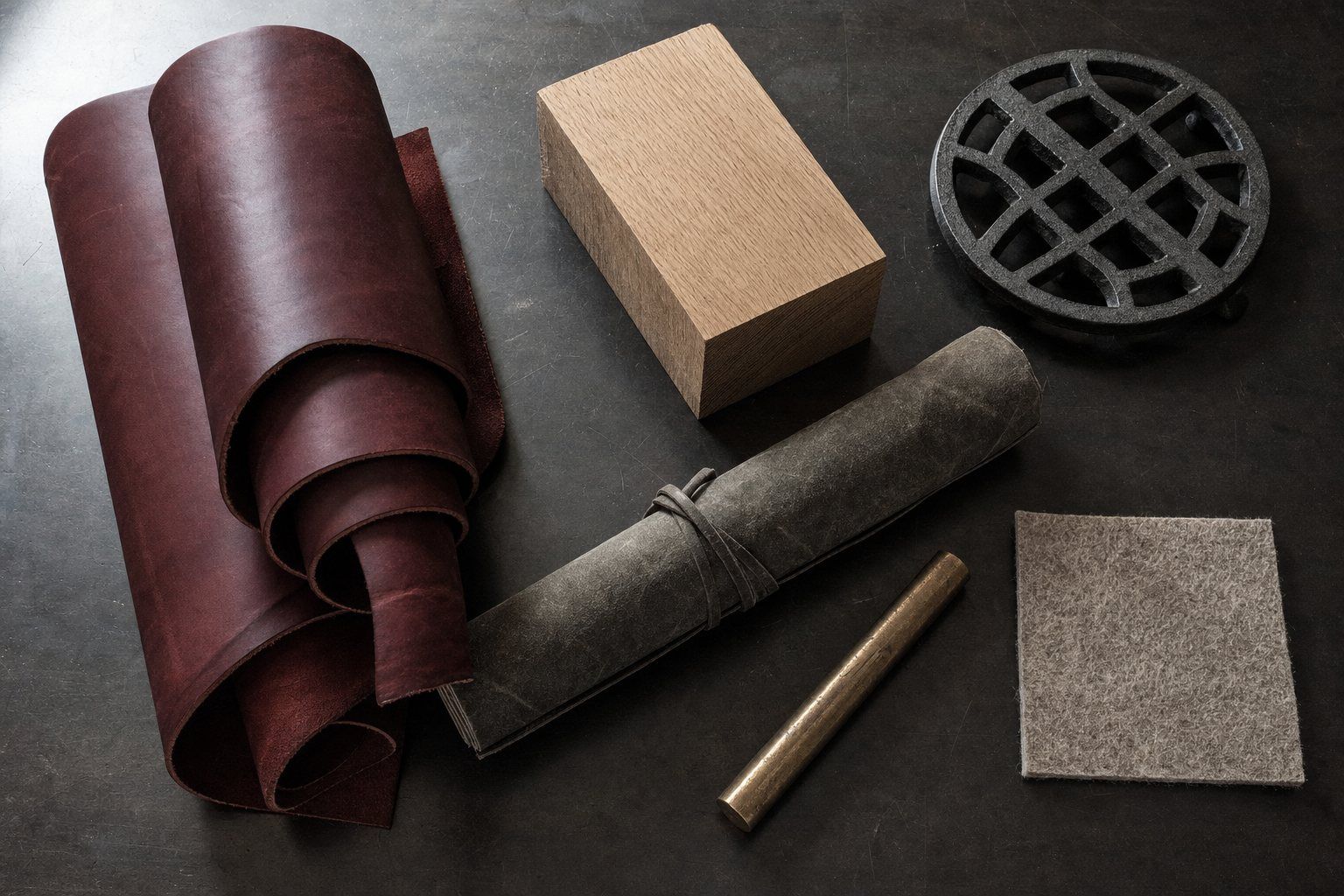
If you learn one thing about durable goods, learn the materials. Construction matters, but a weak material sets a hard limit. Here are the materials that show up again and again in things people keep for decades, and the look-alikes that imitate them.
The pattern: solid, simple, repairable
Long-lasting materials share three traits:
- They’re solid all the way through. There’s no thin top layer to wear off.
- They’re simple. One material, not a sandwich of foam, film and glue.
- They can be renewed. Sanded, oiled, re-waxed, re-seasoned, sharpened or patched.
Short-lived materials tend to be the opposite: a thin attractive surface over something weaker, held together by adhesive.
Full-grain leather
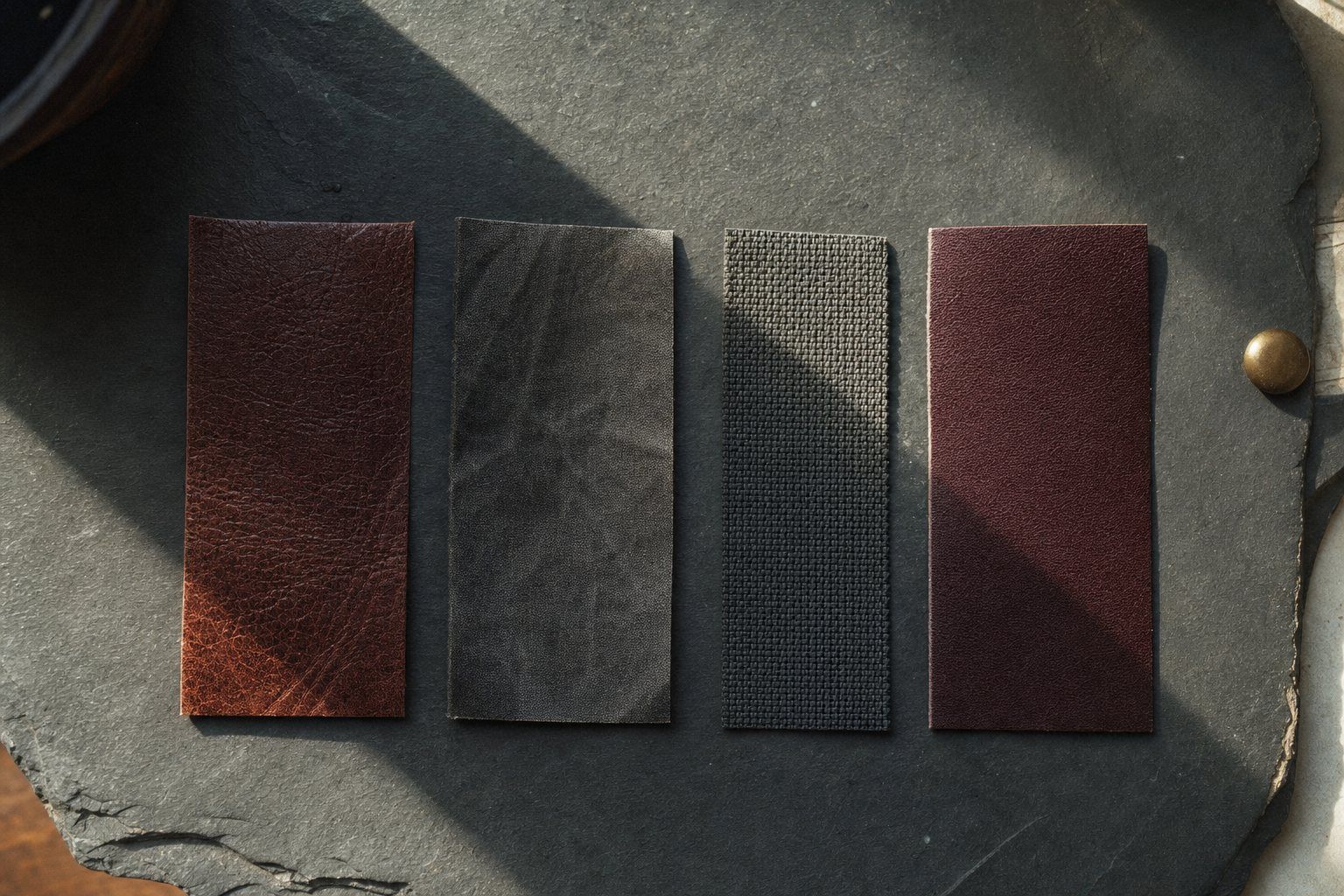
Why it lasts: full-grain leather keeps the top layer of the hide, where the fibers are tightest and strongest. Nothing has been sanded off. It flexes for decades, can be conditioned, and develops a patina.
What weakens it: drying out, long soaking, heat (like a radiator), and never being cleaned or conditioned.
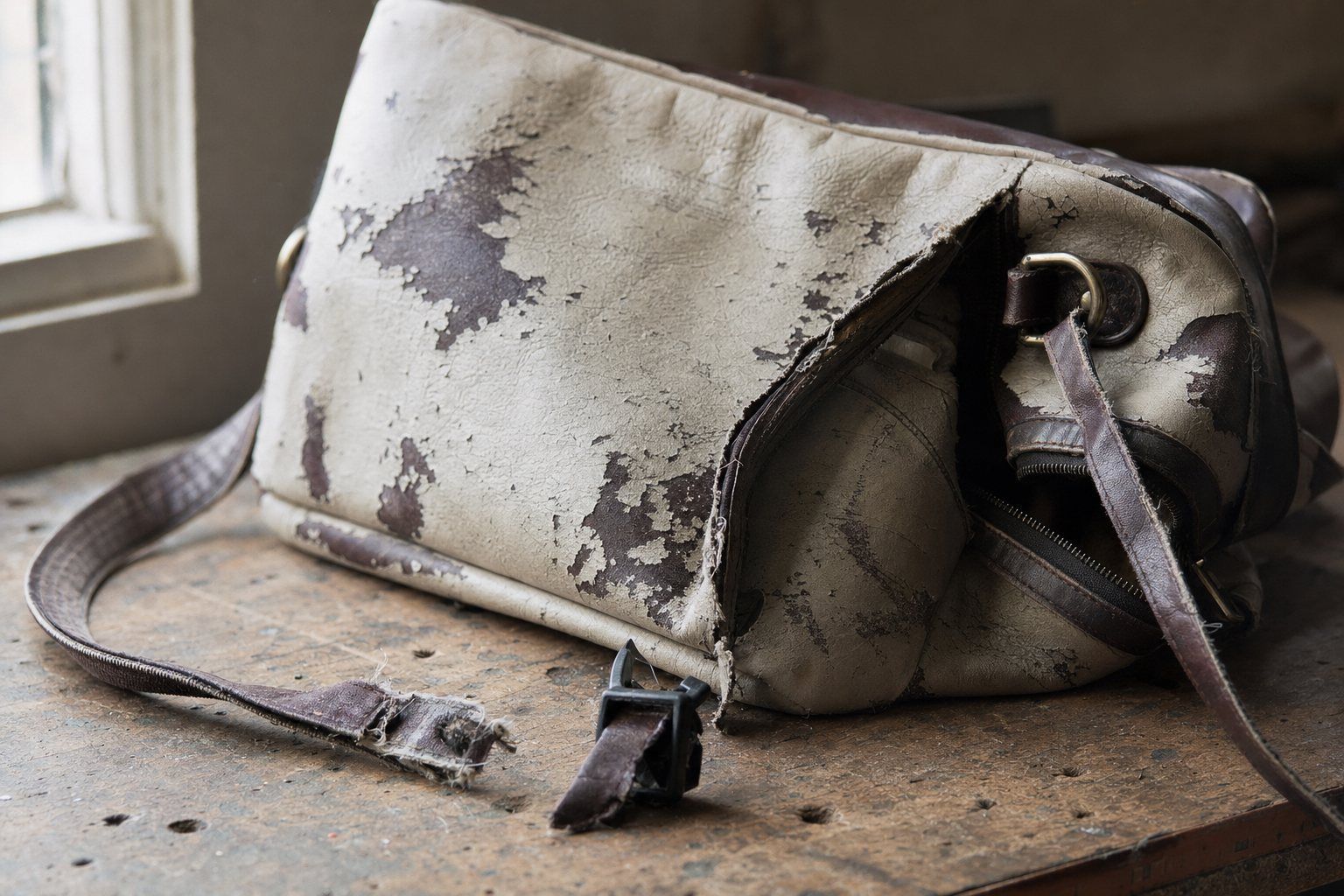
Look-alikes to avoid: “genuine leather” (usually a lower split layer, often coated), bonded leather (leather scraps glued to a backing), and heavily corrected leather that has been sanded and painted. See full grain leather vs other materials.
Cast iron and carbon steel
Why they last: a solid piece of iron or steel with no coating to wear off. The seasoning, a layer of polymerized oil, can always be stripped and rebuilt. Many cast iron pans in use today were made generations ago.
What weakens them: rust from being left wet, cracking from extreme thermal shock, and warping on very thin pans.
Look-alikes to avoid: pans whose cooking surface is a non-stick coating. Coatings wear with use and can’t practically be renewed at home.
Solid hardwood
Why it lasts: oak, walnut, maple, cherry and ash are dense and stable, and they can be sanded and refinished many times. Good joinery (dovetails, mortise and tenon) holds without depending on glue alone.
What weakens it: standing water, very dry heat that causes cracks, and joints that loosen if never tightened.
Look-alikes to avoid: particleboard or MDF covered in a thin veneer or printed film. When the surface chips or swells with water, there’s no fixing it.
Heavy cotton canvas and waxed canvas
Why it lasts: tightly woven heavy cotton (often called duck canvas) resists abrasion well, and wax adds water resistance that you can renew by re-waxing. It’s also easy to patch and sew.
What weakens it: mildew if stored damp, and UV over many years.
Look-alikes to avoid: thin polyester with a plastic coating on the back. The coating eventually delaminates and flakes.
Wool
Why it lasts: wool fibers are naturally elastic, so they bend thousands of times without breaking. Wool resists odor, holds warmth when damp, and dense woven wool (like melton or boiled wool) is very hard-wearing. Holes can be darned.
What weakens it: moths, hot washing that felts and shrinks it, and storing it dirty.
Look-alikes to avoid: low-wool blends that pill quickly.
Brass and solid steel hardware
Why they last: solid brass doesn’t rust, and solid steel is strong. Buckles, rings and clasps made from solid metal outlast the bag or belt they’re on.
What weakens them: very little. Brass tarnishes but can be polished. Steel needs to stay dry or be plated.
Look-alikes to avoid: zinc alloy (sometimes called “zamak”) castings with a brass-colored plating. They’re brittle, can snap under load, and the plating wears off.
High-quality steel blades
Why it lasts: a solid steel blade can be sharpened for decades. A full tang (the steel running through the handle) keeps the handle from working loose.
What weakens it: dishwashers, prying, and hard cutting boards like glass or stone.
Look-alikes to avoid: serrated “never needs sharpening” blades, which can’t easily be sharpened at all.
Quick reference
| Material | Typical lifespan with care | Renewable by |
|---|---|---|
| Full-grain leather | Decades | Cleaning, conditioning, re-stitching |
| Cast iron | Generations | Re-seasoning |
| Solid hardwood | Generations | Sanding, oiling, re-gluing joints |
| Waxed canvas | Decades | Re-waxing, patching |
| Wool | Decades | Darning, careful washing |
| Solid brass | Generations | Polishing |
| Good steel blade | Decades | Sharpening |
These are typical ranges, not guarantees. Use, climate and care decide where in the range a particular item lands. For more on lifespans, see how long should quality gear last?