Guide No. 08 · Lifespans
How Long Should Quality Gear Last?
Typical lifespans for well-made bags, boots, belts, wallets, cookware, knives, jackets and furniture, compared with cheaper versions, and what shortens or extends them.
“How long should this last?” is the question behind every durable purchase, and it’s hard to find straight answers. Here are typical ranges based on how these goods are made and what owners commonly report. Treat them as rough guides, not guarantees.
How to read these numbers
Three things move an item up or down its range:
- Use. A bag carried daily and checked on flights wears faster than one used on weekends.
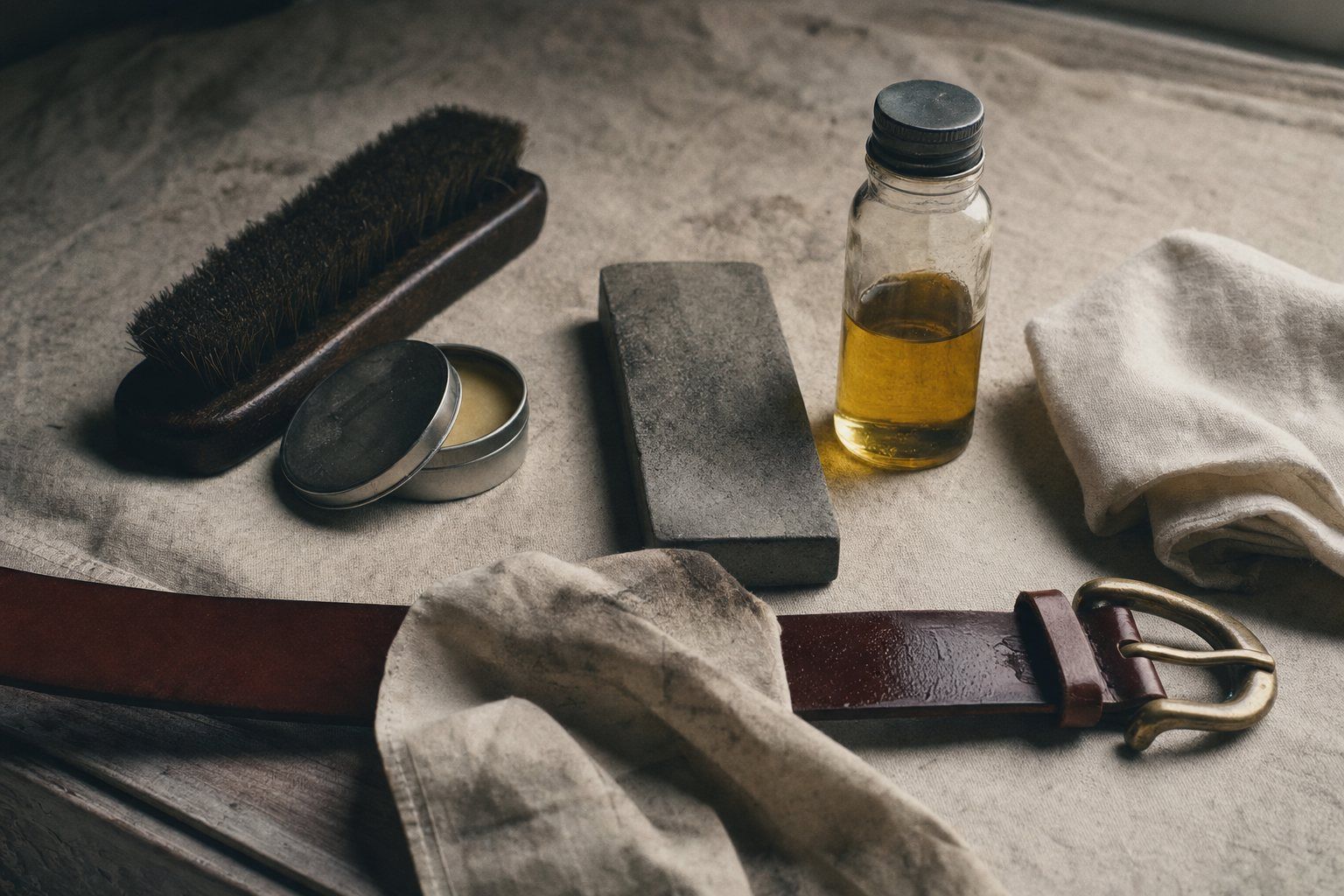
- Care. Cleaning, conditioning and storing things dry can add years. Neglect takes them away.
- Repair. Many of the longest numbers assume a repair or two along the way, like a resole or a new zipper.
Typical lifespans
| Item | Well made, with care | Typical cheap version | What usually ends it |
|---|---|---|---|
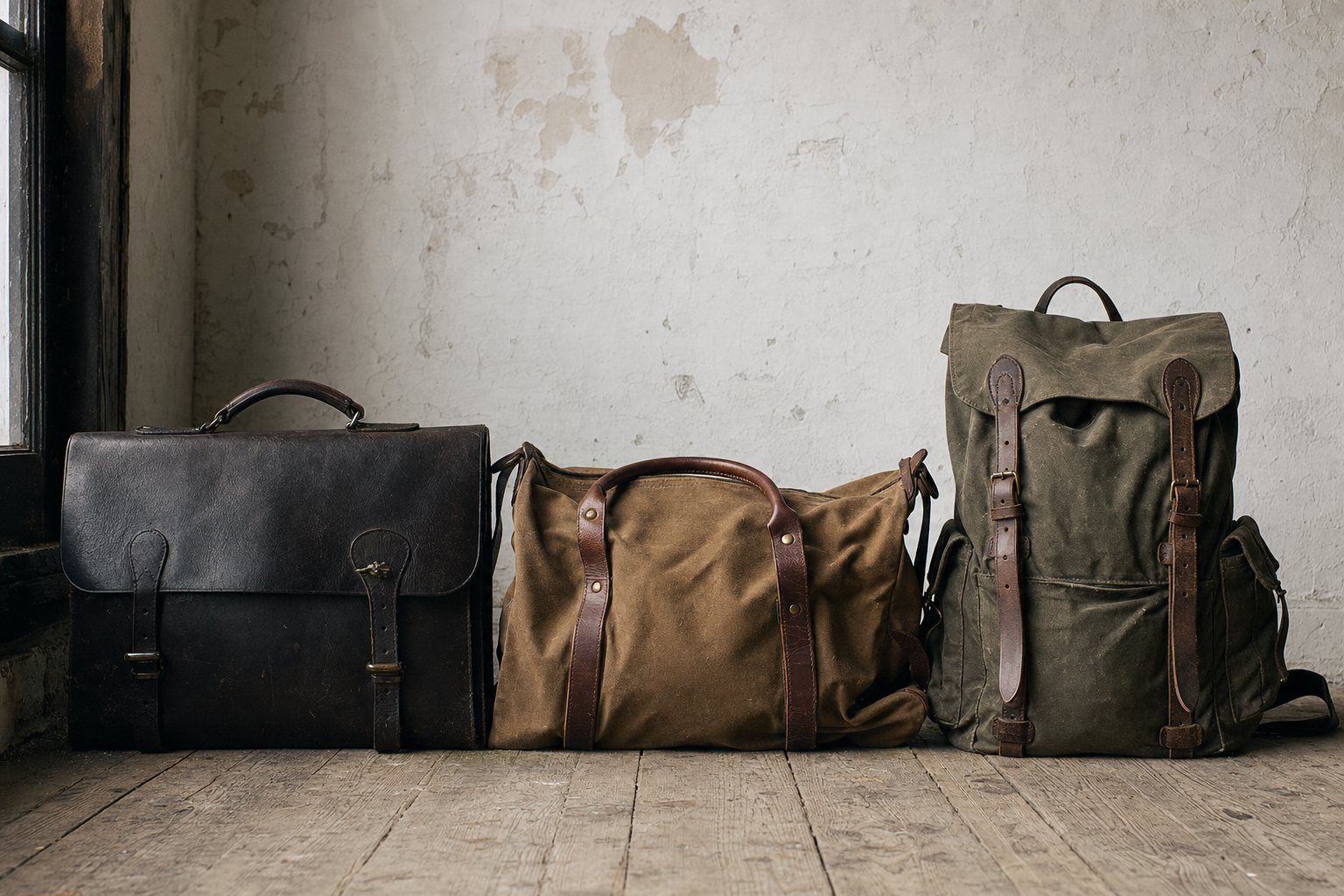
| Leather bag (full grain, stitched) | 15 to 30+ years | 1 to 4 years | Handle anchors, zippers (both repairable on good bags) |
| Waxed canvas bag | 10 to 25 years | 2 to 5 years | Abrasion at corners, rotted stitching |
| Leather boots (welted) | 10 to 25+ years with resoles | 1 to 3 years | Uppers cracking from neglect |
| Leather belt (single layer) | 15 to 30+ years | 1 to 3 years | Cracking at the holes, buckle failure |
| Leather wallet | 10 to 20+ years | 1 to 3 years | Edge wear, stitching |
| Cast iron skillet | Generations | Not applicable | Cracks from severe thermal shock (rare) |
| Non-stick pan | Not applicable | 2 to 5 years | Coating wear |
| Chef’s knife (good steel) | Decades | 2 to 5 years | Handle loosening, chips, poor sharpening |
| Wool coat | 15 to 30 years | 2 to 5 years | Moths, worn cuffs and lining |
| Solid wood table | Generations | 5 to 10 years (particleboard) | Loose joints (fixable) |
| Mechanical watch | Decades with servicing | Not applicable | Skipped services |
These figures are illustrative. They reflect common experience and how each item is built, not controlled testing.
Why cheap versions fail so early
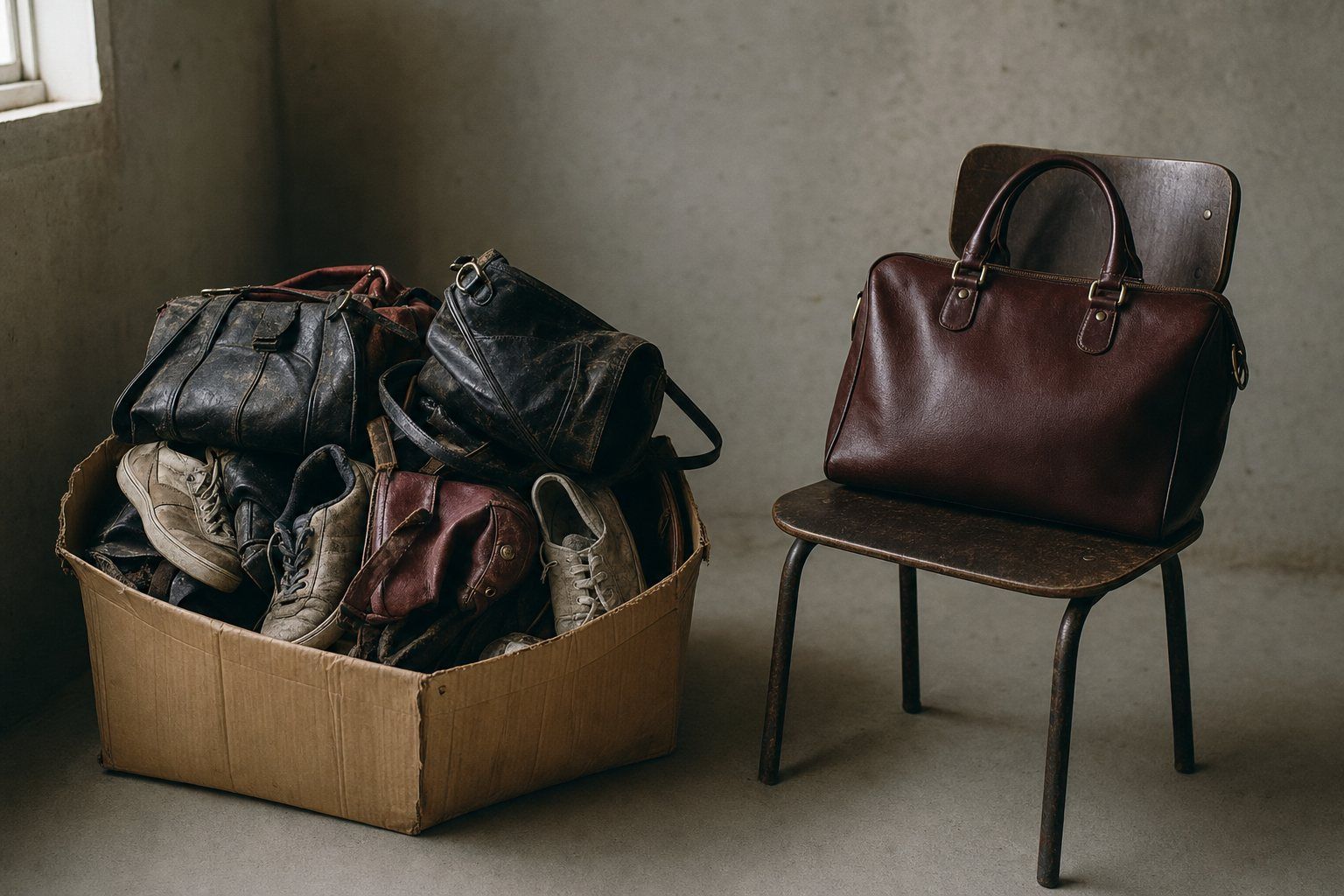
The short lifespans on the right don’t happen because the whole item wears out. They happen because one weak part fails and can’t be fixed: a glued sole lets go, a bonded belt peels, a coating wears through, a plastic buckle snaps. See common signs of poor construction for the full list.
What shortens a good item’s life
- Moisture and heat. Leather left wet or dried on a radiator cracks. Wool stored damp gets moths and mildew.
- Never cleaning. Grit wears fibers and stitching from the inside.
- Skipping the cheap repair. A loose stitch fixed today costs little. Left alone, it becomes a torn handle.
- Wrong use. A dress briefcase used as a gym bag, a chef’s knife used as a pry bar.
What extends it
- Rotation. Boots and shoes last much longer with a day off between wears to dry out.
- Simple, regular care. See how to maintain gear so it lasts decades.
- Early repair. Fix things at the first sign of trouble.
- Good storage. Dry, out of direct sun, with some airflow. Stuff bags and boots so they hold their shape.
Using lifespans to decide what to buy
Lifespan is half of the cost equation. The other half is price. Divide one by the other and you get the cost per year, which is the fairest way to compare a cheap item with a durable one. Our cost per year calculator does that, including upkeep. For the bigger picture, read the hidden cost of cheap goods.